Mademoiselle Avrillion, who served as a lady-in-waiting to the Empress Josephine, published her memoirs with the intention of “recounting with simplicity and in good faith what I have seen and heard during the more than twelve years I spent in the service of an excellent woman, who, in fatal circumstances, also had her own kind of heroism.” In her view, wrote Mlle Avrillion, “I owe it to her memory to avenge the calumnies of which she has been the object, to rectify the involuntary errors into which some authors may have fallen, and in short, to make known a host of facts I witnessed, which belong, if not to the history of the empire, at least to that of Napoleon’s first companion.” She leaves us the following excerpt on Joachim and Caroline Murat, with descriptions of the couple, insight on Napoleon’s views on Murat (of which her overall impression is negative), and some interesting anecdotes regarding Caroline.
Source: Mémoires de Mademoiselle Avrillion, première femme de chambre de l’impératrice, Vol I(Paris: Chez Ladvocat, 1833), 345-355.
*****
The princess Caroline, the youngest of the emperor’s sisters and the only one whose ambition to reign was satisfied, had come to France very young, and spent some time in the house of Madame Campan, in order to perfect her education. It is known that, in the first year of the Consulate, the First Consul, still living in the Luxembourg, married her to Murat, who has since been the Grand Duke of Berg and then King of Naples. I dwell little on these facts, since I could only repeat what has been said elsewhere with more details than I would be in a position to give, all this relating to a time when I was far from foreseeing that one day I would have the honor of being attached to the service of the Empress.
When I saw Madame Murat for the first time, it was on a day when she came to pay a visit to Mademoiselle de Tascher. I was especially struck by the dazzling whiteness of her skin; she had a very lovely head, was of an extreme freshness, of a small size, but it wasn’t long before she became a little too overweight; the court dress weighed her down, so she looked must better in negligee than in formal attire. She was, moreover, a person of infinite intelligence and at the same time of extreme ambition. In her desire to reign, she did not cease to solicit the emperor to give her husband a crown; but despite all the friendship, I could say the preference, that the emperor had for his youngest sister, he resisted for a long time. However, events having placed the crown of Spain at his disposal, the solicitations of Madame Murat recommenced with even more diligence than before, but he did not accede, wanting it to be one of his brothers who ascended to the throne of Spain. The offer was first made to Prince Lucien, who had retired to Rome and who then had no other rank in France but senator; but the emperor required as a first condition that he separate from the woman he had married from inclination, after having, it was said, known her very intimately. In this circumstance, the conduct of Prince Lucien was that of an honest man; he flatly refused to leave out of ambition a woman for whom he had retained a strong attachment and with whom he had children. In this occurrence, the emperor gave the first example, at least to my knowledge, of a transfer of throne, as if he wanted to establish among kings an order of advancement like that which existed in his army. It was thus decided that King Joseph would quit the throne of Naples for that of Madrid, and that Prince Murat would go replace him in Naples. King Joseph, who, as we have seen, had great difficulty in deciding to go to Naples, nevertheless suffered in leaving his kingdom for another, after having to some extent acclimated and earned the approbation of the Neapolitans.
Without ambition as he certainly was, when events forced him to return to France, King Joseph would not have regretted his crown if the successive defeats and troubles which deprived him of it had not thwarted the designs of Napoleon.
However, Prince Murat, named King of Naples, went there promptly, after having sent his children ahead, as proof of the trust that he had in his new subjects. He arrived himself in Naples in broad daylight, without escort, accompanied by a single aide-de-camp, General Paul de La Vauguyon, and the queen was not long in going to join him.
These young and brilliant sovereigns brought with them the taste of luxury and grandeur, and as it is a lot in Italy to speak to the eyes, they were perfectly welcomed.
Here, I cannot refrain from telling an anecdote which proves at least all the foresight of the queen so that her palace in Naples could be furnished in the French style. As governor of Paris, Marshal Murat had lived on the Rue de Provence, in the Hotel Thélusson, in front of which rose an enormous arcade, having almost the proportions of an arc-de-triomphe. Becoming Grand Duke of Berg, Prince Murat found this hotel too small; and it was then that the city of Paris gave him the Elysée which was furnished with the greatest sumptuousness. In naming his brother-in-law King of Naples, the emperor had made him renounce the Grand Duchy of Berg in favor of Prince Louis’ eldest son; His Majesty had also stipulated that all the property, movable and immovable, which he owned in France, would revert to the imperial crown. The queen having received from the emperor the injunction to go join her husband, M. Lefuel, curator of the furniture of the imperial palaces, went to the Elysée before her departure to verify the inventory of the furniture. Having been announced to the queen, she told him he would have to return after ten days; M. Lefuel let fifteen days pass. What did he see when he entered the courts? He found them cluttered with enormous cases. He entered the apartments; there were empty. “What does this mean?” he asked the palace steward. “It means that the queen has had everything packed up.” “But my responsibility?” “What do you want? You will draw up a report of the state in which you found the premises, and your liability will be covered. What could you do against the emperor’s sister? Without a doubt, His Majesty would be displeased with you for speaking loudly about this; the emperor certainly does not want it known in Paris that at the moment when he has just made her queen, his sister took the furniture when she moved.” So it happened; there was no more question of it; and this is why, without a doubt, King Ferdinand, returning to his states, will have found his palace more elegantly furnished than it was at the time of his departure.
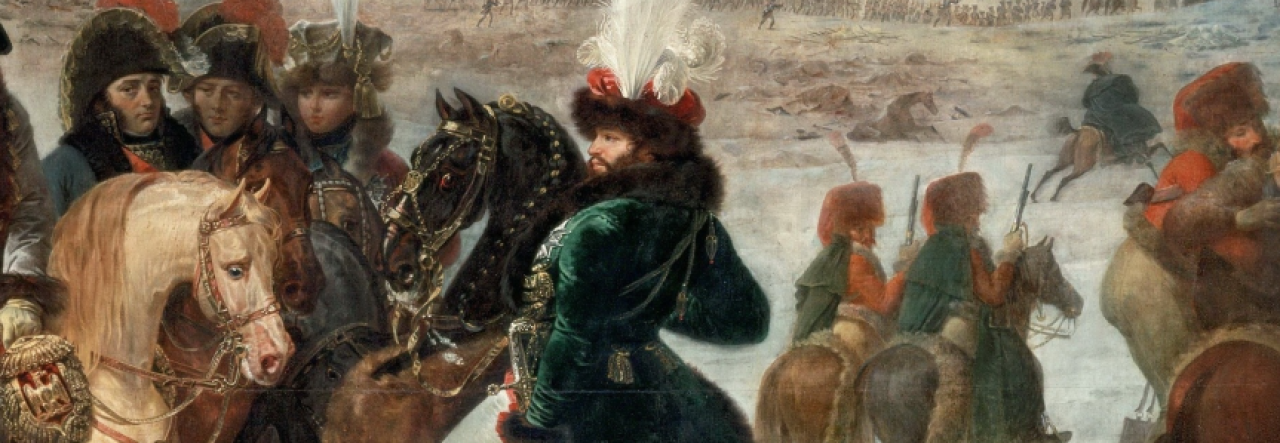
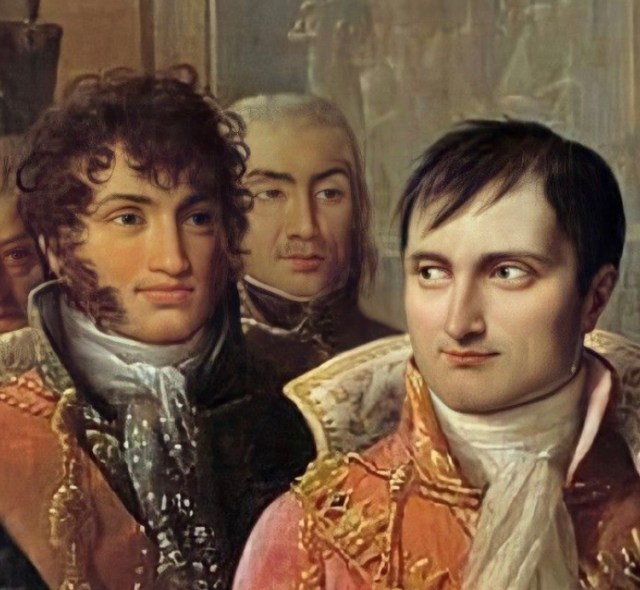
Prince Murat was a very handsome man, very tall, very generous, and very good to the people around him; the queen was imbued with the same sentiments. All the French they brought with them to Naples returned overwhelmed with the marks of their munificence. We know about King Murat’s taste for la toilette, which contrasted singularly with his incredible bravery and the toughness with which he knew how to bear all the suffering and all the privations on the battlefields. The emperor often took the subject of his brother-in-law’s costumes for the text of his jokes; I have even heard him mock them seriously and with bitterness. Furthermore, I am authorized to believe that, deep down, the emperor did not like Prince Murat, and he spoke of him, in general, in an unobliging manner. His curly hair falling on his shoulders, which made him resemble a king of theatre, particularly displeased him; and if the emperor disdained to deal openly in such puerilities, it was not so in his moments of intimacy with the empress, where nothing escaped his critical observations.
The King and Queen of Naples made a good enough couple, at least in appearance; however, the scandalous chronicle of the time did not always spare Madame Murat: M. Metternich was especially talked about, and I even heard told, at that time, an anecdote which, true or false, went as far as the ears of the emperor. It proves also how much M. Metternich was endowed with the gift of pleasing. In I don’t know which winter, there was, at Madame Murat’s place, a very lovely masked ball; all the court was there, and the emperor honored her with his presence. During the ball, a pretty little domino, well-disguised, well-masked, approached one of our generals who had been married for a few years to a fairly pretty and very spiritual woman. “Your wife,” said the domino to the general, with the freedom the mask allows, “your wife deceives you, and M. Metternich is her accomplice.” Thereupon the domino moved away, and the general remained, devastated by the surprise and by some other feeling, because he was not naturally very enduring. He set out to pursue the domino, and having joined her, absolutely demanded more circumstantial evidence. “I want to,” said the malicious mask, “your wife is here, and it is not likely that she will leave the ball within two or three hours; so you have time to verify if what I told you is true. Go to your home: open your wife’s secretary; in such a place, in such and such a drawer, you will find a small packet of letters, tied with a pink favor; take the packet, and you will see.” The general followed the mask’s instructions step by step, he took the packet and saw only too much; the unfortunate man! The first outburst of his jealousy was, it is said, terrible; but he was forced to calm his fury: it was observed to him that, in an adventure of this kind, it was necessary to know how to master one’s discontent. The fact that I have just cited is known to so many people that I think I can dispense with naming those who played a role in it.
Madame Murat ended up enjoying Naples very much: husband and wife equally loved power, luxury, and performance; and as the reverential muscles of the men of the court are even more supple in Italy than anywhere else, the great ones of the kingdom were soon on their knees. This humility had nothing which displeased Queen Caroline, for one day, while examining our court, during a voyage she had made to Paris, she said to the empress: “One only reigns well in Naples.” Those are her own expressions, as I heard them repeated to His Majesty.
***


Metternich was kind of good looking but Murat….*whew
LikeLike